When people think about getting dental implants, most of the focus lands on the implant itself. But before a single implant is placed, the health and density of your jawbone have already determined a great deal about whether the procedure will succeed. Bone loss is one of the most common and most misunderstood factors in implant planning, and getting ahead of it makes all the difference.
At Artistic Dental in Jackson, NJ, we offer a comprehensive approach to implant care that starts long before the implant is ever placed. Using advanced 3D CBCT imaging, we evaluate the full picture of your jaw structure, identify any bone deficiencies, and create a personalized treatment plan that addresses them directly. Whether that means a bone graft before your procedure or an implant solution designed to work with your existing bone, our dental implants team is equipped to guide you through every step.
Why The Jawbone Shrinks After Tooth Loss
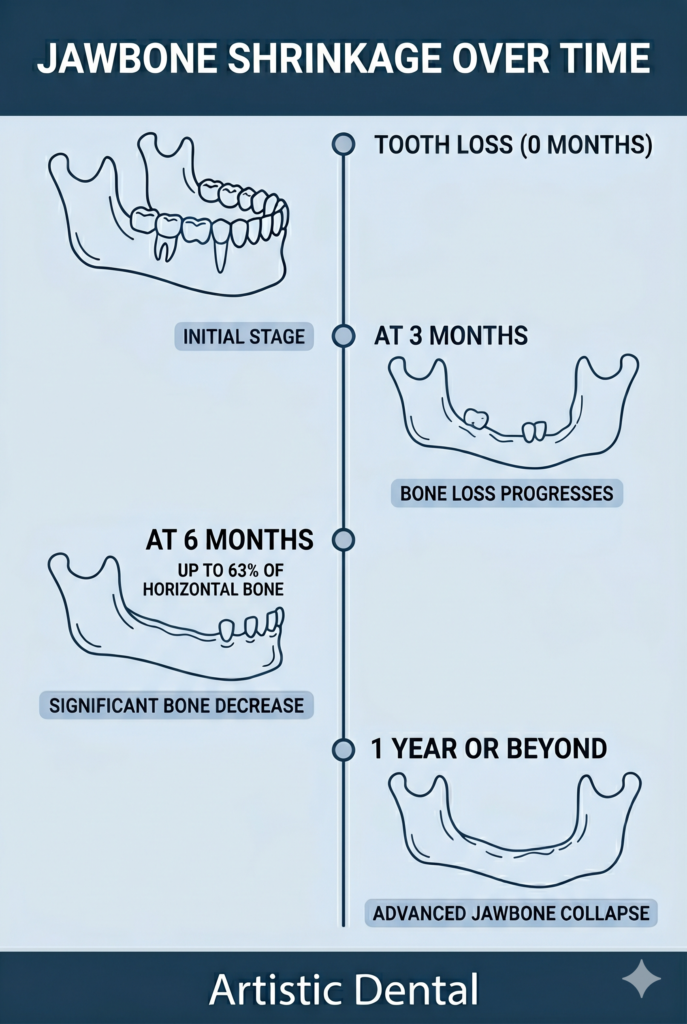
The jawbone depends on stimulation to maintain its density. When you chew, the pressure travels through the tooth root into the surrounding bone, and that signal tells the body to keep building new bone tissue. Once a tooth is gone, that signal stops. The bone in that area begins to break down through a process called resorption.
This happens faster than most people expect. According to a review published in the National Journal of Maxillofacial Surgery, the alveolar ridge can experience horizontal bone loss of up 63% within the first six months after extraction. Vertical bone loss follows as well, making the site progressively less suitable for an implant the longer it goes untreated. Time is genuinely a factor here, and the window for preserving bone is most effective in the period immediately following tooth loss.
What Happens When Bone Loss Is Severe?
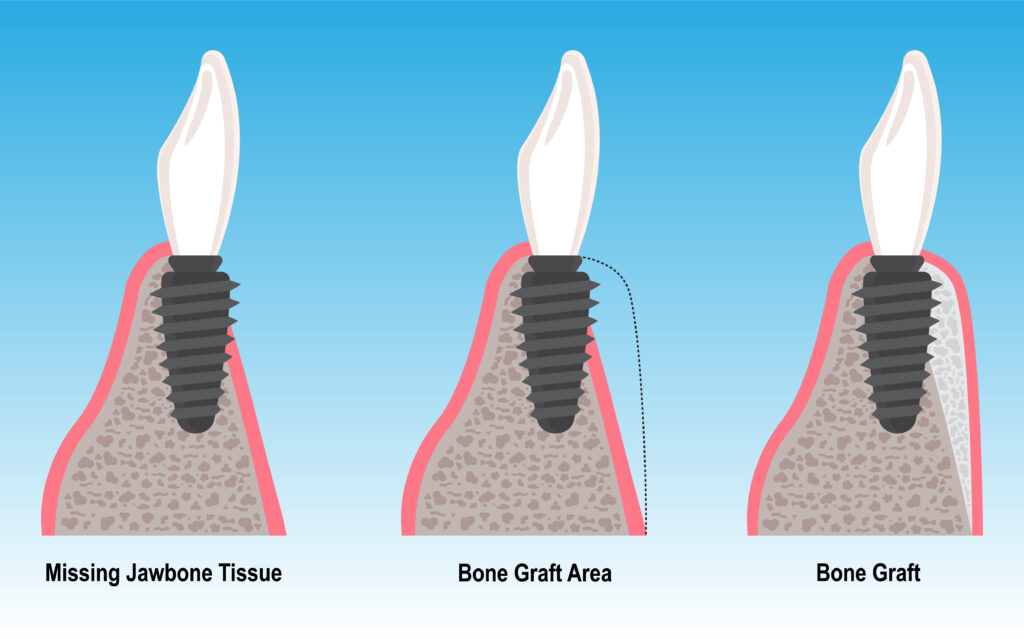
An implant is a titanium post that must be anchored securely in the jawbone to function. If the bone at the implant site has deteriorated significantly, there is not enough structure to hold the implant in place during healing, which can lead to implant failure. Beyond function, bone loss also affects how the implant and the final restoration will look. A collapsed ridge can make the implant crown appear too long, or the gum tissue look uneven.
Bone loss does not only follow tooth extraction. Gum disease is another major contributor. Periodontitis destroys the bone and connective tissue that support teeth, and patients who have experienced significant periodontal disease often arrive with compromised bone structure before they have even lost a tooth. Smoking and certain systemic conditions, such as diabetes, can accelerate this deterioration as well.
What Can Be Done About Bone Loss?
The encouraging news is that bone loss does not disqualify you from getting implants. There are well-established solutions that restore the necessary bone volume and create a healthy foundation for a successful result.
A bone graft is the most common approach. During this procedure, bone material is placed in the area where volume has been lost, and over several months, the body integrates it into the existing jaw structure. Our bone grafting procedures use carefully selected materials to support natural bone regeneration. Once the graft has healed, the site is typically ready to receive an implant with the same level of stability as a patient who never experienced bone loss.
For patients who have lost most or all of their teeth and have experienced more extensive deterioration, All-on-4 may be an option. This approach uses four strategically positioned implants, including two placed at an angle to take advantage of areas where bone density is still strong, reducing or eliminating the need for grafting in many cases. It is a particularly effective path for patients who have been told elsewhere that they do not have enough bone for traditional implants.
The Role Of Imaging In Implant Planning
One reason thorough evaluation matters so much is that bone loss is not always visible or felt. A tooth may look fine in a standard photograph, and a patient may feel no discomfort, while significant bone loss is occurring beneath the surface. At Artistic Dental, we use 3D CBCT imaging to get a precise, three-dimensional picture of your jaw structure before any treatment begins. This technology allows us to measure bone height, width, and density at the exact implant site, identify areas of concern early, and plan with a level of accuracy that two-dimensional X-rays simply cannot provide. It removes the guesswork entirely.
Start Your Dental Implant Journey At Artistic Dental
Understanding your bone health is the first step toward a restoration that lasts. At Artistic Dental, Dr. Jason M. Goldberg brings focused implant training and a commitment to thorough, individualized care to every patient who walks through our doors. We take the time to evaluate your full picture, address any bone deficiencies, and build a treatment plan that sets you up for the best possible outcome.
Whether you are just beginning to explore implants or have been told you may not be a candidate, we encourage you to come in and find out what is truly possible for your smile. Flexible financing and savings plan options are available to help make your treatment accessible. When you are ready to take the next step, contact our office to schedule your consultation.

Medically reviewed by Dr. Miryam Bookman, DMD
Dr. Bookman is a co-owner of Artistic Dental Group in Jackson, NJ, and a member of the American Dental Association and New Jersey Dental Association. She reviews clinical content published on this site for accuracy.
This article is for general educational purposes and is not a substitute for professional dental advice, diagnosis, or treatment. Always consult your dentist about your specific needs.