
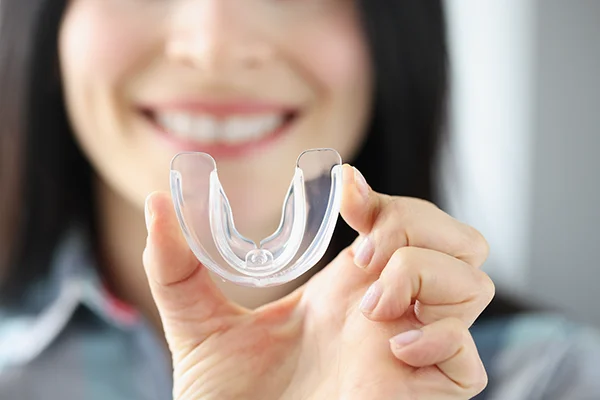
A mouthguard protects your teeth, but the right one depends on what you are protecting them from. Some people need cushioning against a blow during sports, and others need protection from grinding or clenching at night.
At Artistic Dental Group in Jackson, NJ, Drs. Goldberg, Bookman, and Seto help patients choose a guard that fits their mouth. A guard that is comfortable is a guard you will actually wear.
Finding Your Right Fit
Night Guards and Teeth Grinding
Bruxism is the medical term for grinding, clenching, or gnashing the teeth, and it can happen while awake or asleep. According to the National Institute of Dental and Craniofacial Research, many cases are mild and may not need treatment, but severe grinding can damage teeth and cause jaw pain, tiredness, and headaches.
A night guard is a mouth guard that separates the upper and lower teeth to help prevent damage and may reduce muscle activity. It does not remove the reasons you grind. Stress, genes, alcohol, caffeine, smoking, and some medications all appear to play a role, so your dentist may talk with you about habits as well.
Signs You May Be Grinding Your Teeth
Many people grind without knowing it. These are common signs.
- Flattened, chipped, cracked, or loose teeth.
- Worn enamel.
- Tooth pain or sensitivity.
- Jaw soreness, tightness, or tiredness.
- Headaches or facial pain.
A dental exam is often how grinding is first noticed, and a sleeping partner may also have heard it.
Choosing Between Stock, Boil-and-Bite, and Custom Guards
The American Dental Association notes that the best mouthguard is one made for your mouth by your dentist, and that fit is the main factor. A custom guard costs more, while stock guards are the least expensive and boil-and-bite guards sit in the middle. For sports, the ADA still recommends wearing a boil-and-bite or stock guard if a custom one is not an option.
For night wear, your doctor can explain which style makes sense for you, based on your teeth, your bite, and how much you grind.
Mouthguards for Sports
Mouth injuries can happen in contact sports and in activities such as gymnastics or skating. People with braces or fixed bridgework may benefit especially from a well-fitted guard. You can read more on our sports guard page.
When Grinding Affects Your Jaw or Teeth
If grinding has chipped or worn your teeth, repairs are possible, and sometimes that includes dental crowns. If you have ongoing jaw pain or clicking, ask about our TMJ care, since a mouthguard may be only one part of the plan.
Caring for Your Mouthguard
Rinse your guard before and after each use, or brush it with toothpaste, and clean it regularly in cool, soapy water. Store it in a sturdy, vented case away from heat and pets, and bring it to your dental checkups so we can look it over. Replace it right away if it is worn, damaged, or no longer fits.