
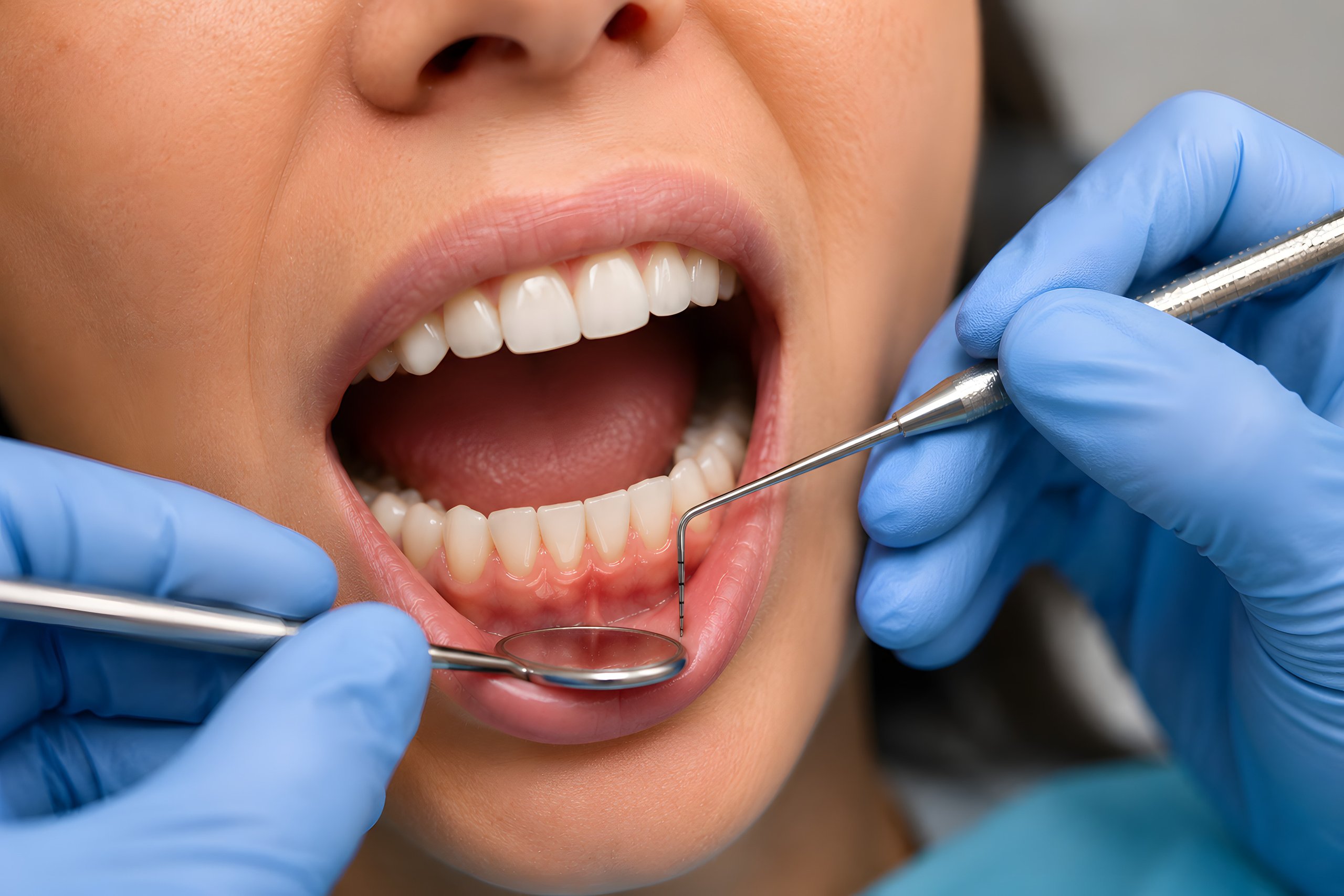
You just left your dental cleaning, and the receptionist mentioned a code or term you have never heard before, like “perio maintenance” or “scaling and root planing.” Maybe your bill looked different than last year’s, or your hygienist spent more time than usual poking around your gums with a small measuring tool. These differences are not random. They reflect distinct clinical categories based on your gum health, not simply how thorough your dentist feels that day.
At Artistic Dental, we want you to understand exactly what type of cleaning you are receiving and why. Dr. Miryam Bookman and our team believe informed patients make better decisions about their oral health, so we are breaking down the four main types of dental cleanings: prophylaxis, gingivitis cleaning, scaling and root planing, and periodontal maintenance.
What Is a Prophylaxis (Prophy)?
A prophylaxis, commonly called a prophy, is the routine cleaning most people picture when they think of a dental visit. This procedure is designed for patients with generally healthy gums who have not developed periodontal disease. During a prophy, our hygienists remove plaque, calculus, and surface stains from the crowns of your teeth, the part visible above the gumline.
A prophy is preventive, not therapeutic. It stops problems before they start, not treating existing disease. If you have never had gum disease and keep up with your routine dental checkups, a standard prophy every six months is likely all you need to maintain healthy gums and a bright smile.
What Is a Gingivitis Cleaning?
Gingivitis is the earliest and most reversible stage of gum disease. It shows up as redness, swelling, and bleeding when you brush or floss, usually without any bone loss around the teeth. When our team identifies generalized moderate to severe gingival inflammation during your exam, we may recommend what we call a gingivitis cleaning.
This service targets both the visible crown surfaces and some areas just below the gumline, addressing inflammation before it advances into true periodontal disease. Because this procedure sits between a standard prophy and full periodontal treatment, we tailor it to the level of inflammation we see throughout your mouth.
According to the Centers for Disease Control and Prevention, gingivitis is largely preventable and treatable through routine hygiene and professional cleanings, which is exactly why catching it early matters so much. Left untreated, gingivitis can progress into periodontitis, a more serious condition involving irreversible bone loss.
What Is Scaling and Root Planing (SRP)?
Scaling and root planing, sometimes called a deep cleaning, is a therapeutic procedure reserved for patients who already have periodontal disease. Unlike a prophy, SRP targets the root surfaces below the gumline, removing calculus, bacteria, and toxins that have accumulated in periodontal pockets.
Root planing goes a step further by smoothing rough areas of the root surface, making it harder for bacteria to reattach and easier for your gums to heal and reattach to the tooth. Because SRP addresses active disease rather than just prevention, our team typically completes this procedure in sections, treating one or two quadrants of your mouth per visit so you stay comfortable throughout treatment.
We often use local anesthetic during SRP because we work below the gumline in areas that can be sensitive. Most patients tolerate this procedure very well and notice reduced bleeding and swelling within a few weeks of treatment.
What Is Periodontal Maintenance?
Periodontal maintenance is the ongoing care that follows scaling and root planing. Once you have been treated for periodontal disease, your gums require a different level of monitoring and care than a patient who has never had periodontitis. This is because periodontal disease is chronic. You can manage it successfully, but it doesn’t simply go away after one round of treatment.
During periodontal maintenance visits, we:
- Measure: Check pocket depths around each tooth to track gum health over time.
- Remove: Clear plaque and calculus from both above and below the gumline.
- Monitor: Watch for any signs of disease recurrence or progression.
- Educate: Reinforce at-home hygiene techniques suited to your specific needs.
These visits typically happen every three to four months rather than the standard six-month interval, since patients with a periodontal history need closer monitoring to prevent the disease from returning. Skipping or delaying periodontal maintenance is one of the most common reasons gum disease resurfaces after successful treatment.
Why Does This Distinction Matter for Your Oral Health?
Understanding which category your cleaning falls into helps you make sense of your treatment plan and your insurance coverage, since these procedures are billed and covered differently. It also helps you understand why your hygienist may recommend a different appointment frequency or a more involved cleaning than you expected.
Our team never recommends a deep cleaning or periodontal maintenance program without a clear clinical reason. Every recommendation is based on your periodontal charting, our oral cancer and tissue screening, and X-ray findings, not on a one-size-fits-all schedule.
Trust Artistic Dental With Your Gum Health
With advanced technology like digital X-rays and intraoral cameras, our team can catch gum disease in its earliest stages, often before you notice any symptoms yourself. Dr. Bookman and our hygienists take the time to explain exactly what we see during your exam and why we are recommending a particular type of cleaning, so you always understand the reasoning behind your care.
If it’s been a while since your last periodontal evaluation, or you are unsure which type of cleaning you need, we would love to see you. Contact us today to schedule your next visit with Artistic Dental.